

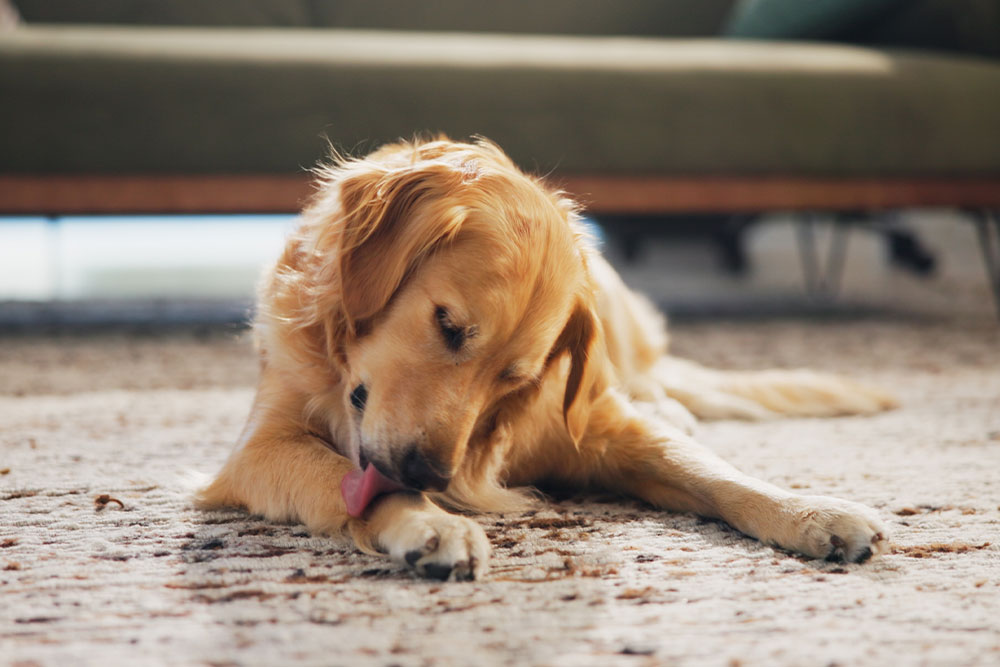
It can be worrying to see your dog licking their paws over and over—especially if it seems like they can’t stop. You might wonder if it’s just a habit or a sign that something’s wrong. You’re not alone in asking this question, and we’re here to help you understand what might be going on.
At Adobe Animal Hospital, we know how much your pets mean to you. Our goal is to help you get to the root of the problem so your dog can feel comfortable and happy again.
Common Reasons Dogs Lick Their Paws
Frequent paw-licking can have many causes—some minor, others that need a closer look. Here are a few of the most common ones:
- Allergies: One of the top reasons! Dogs can be allergic to pollen, dust, grass, or certain foods, which can make their paws itchy.
- Irritation or Injury: Small cuts, insect bites, or burrs caught between the toes can cause discomfort.
- Dry or Cracked Skin: Weather changes or frequent bathing can dry out paw pads, leading to licking for relief.
- Infections: Bacteria or yeast can cause redness, odor, or discharge, and licking may make it worse.
- Pain or Arthritis: Sometimes, dogs lick one paw more than others because of joint pain or another underlying issue.
- Habit or Stress: Just like people might bite their nails, some dogs lick out of anxiety or boredom.
When Should You Be Concerned?
It’s time to call your vet if you notice:
- Persistent licking that doesn’t stop after a day or two
- Red, swollen, or bleeding paws
- Odor, discharge, or hair loss between the toes
- Limping or sensitivity when you touch their paws
These signs could mean there’s an infection, allergy, or injury that needs attention.
At Adobe Animal Hospital, we’re committed to treating your pets like family.
If you’re ever unsure, we’re just a phone call away—ready to listen, guide you, and provide the care your pet needs to feel better.
TL;DR:
Dogs lick their paws for many reasons—most often allergies, irritation, or discomfort.
Occasional licking is normal, but if it’s constant or causing redness, swelling, or odor, it’s time for a vet visit. We’re here to help your pup get back to feeling their best.